
What Is Obstructive Sleep Apnoea?
Obstructive sleep apnoea syndrome (OSAS), also known as obstructive sleep apnoea, is a sleep-related breathing disorder in which the upper airway repeatedly narrows or closes during sleep. It is estimated to affect approximately 1% to 4% of children.
While snoring is a common symptom, not every child who snores has OSAS. An assessment can help determine whether your child’s breathing and sleep are being disrupted.
What Are the Symptoms of Obstructive Sleep Apnoea?
Symptoms during sleep may include:
- Loud or habitual snoring
- Pauses or shallow breathing
- Snorting, choking or gasping
- Laboured breathing or pulling in of the chest
- Restless sleep and frequent waking
- Sleeping with the neck extended or in an unusual position
- Heavy sweating during sleep
- Persistent mouth breathing
- Bedwetting
Daytime signs may include:
- Difficulty waking in the morning
- Morning headaches
- Irritability or changes in mood
- Hyperactivity or difficulty concentrating
- Learning or behavioural concerns
- Daytime sleepiness
- Poor growth or difficulty gaining weight
Children do not always appear sleepy when their sleep is disrupted. Some may instead become unusually active, inattentive or irritable. Snoring may not be a prominent symptom in younger children, so the absence of snoring does not necessarily mean that a child does not have obstructive sleep apnoea. If other symptoms are present, it is still important to visit a doctor.
Who Is More Likely to Develop Obstructive Sleep Apnoea?
Enlarged tonsils and adenoids are common causes of OSAS in children.
A child may also have a higher likelihood of developing OSAS if they:
- Have airway allergies, e.g., allergic rhinitis or asthma
- Are overweight
- Have differences in the structure of the jaw, face or upper airway
- Have a condition that affects muscle strength or nerve control
- Have Down syndrome or certain genetic conditions
- Have a family history of obstructive sleep apnoea
Nasal allergies and upper respiratory infections may worsen existing OSAS by further narrowing the airway.
When Should You See a Doctor?
Consult a doctor if your child:
- Snores loudly or regularly
- Appears to stop breathing during sleep
- Gasps, chokes or struggles to breathe while sleeping
- Sleeps restlessly or in an unusual position
- Breathes through the mouth most of the time
- Is difficult to wake despite having enough time to sleep
- Has persistent irritability, hyperactivity or concentration difficulties
- Has unexplained learning, behavioural or growth concerns
If these symptoms occur regularly, your child should be assessed to determine whether they may have OSAS and whether treatment is needed.
When Is Obstructive Sleep Apnoea an Emergency?
Call 995 for an ambulance immediately if your child:
- Has severe or prolonged difficulty breathing
- Has lips or skin that appear blue or grey
- Becomes unresponsive or difficult to wake
- Appears severely distressed while breathing
How Is Obstructive Sleep Apnoea Assessed?
If OSAS is suspected, your child may be referred to a sleep specialist for assessment. A sleep study (polysomnography, or PSG) may be performed to monitor your child’s sleep and breathing overnight.
During the night, various small recording devices are placed on the child’s head and body to monitor their sleep pattern and breathing. These devices record brain waves, leg and arm movements, muscle activity, heartbeat, snoring and breathing patterns. The monitors do not pose any danger to the child, are not painful and are designed to be as comfortable as possible.
The sleep study also allows the sleep specialist to determine how serious the OSAS is, look for any associated sleep problems and decide on the best treatment.
How Is Obstructive Sleep Apnoea Treated?
Treatment depends on the cause and severity of the condition.
Surgery
In many children, enlarged tonsils and adenoids are the predominant contributing cause of OSAS, and your doctor may recommend removing them. This procedure is called adenotonsillectomy. Other types of surgery, such as jaw and facial surgery, may be recommended if your child has a structural problem that is causing OSAS. Tracheotomy (opening a hole in the windpipe at the neck) is generally used only in life-threatening OSAS when no other suitable treatment is available.
Many children improve after surgery, but OSAS may persist in some children. A follow-up assessment, and sometimes a second sleep study, may be needed to check whether OSAS has resolved. Follow the advice of your sleep specialist.
Positive Airway Pressure (PAP)
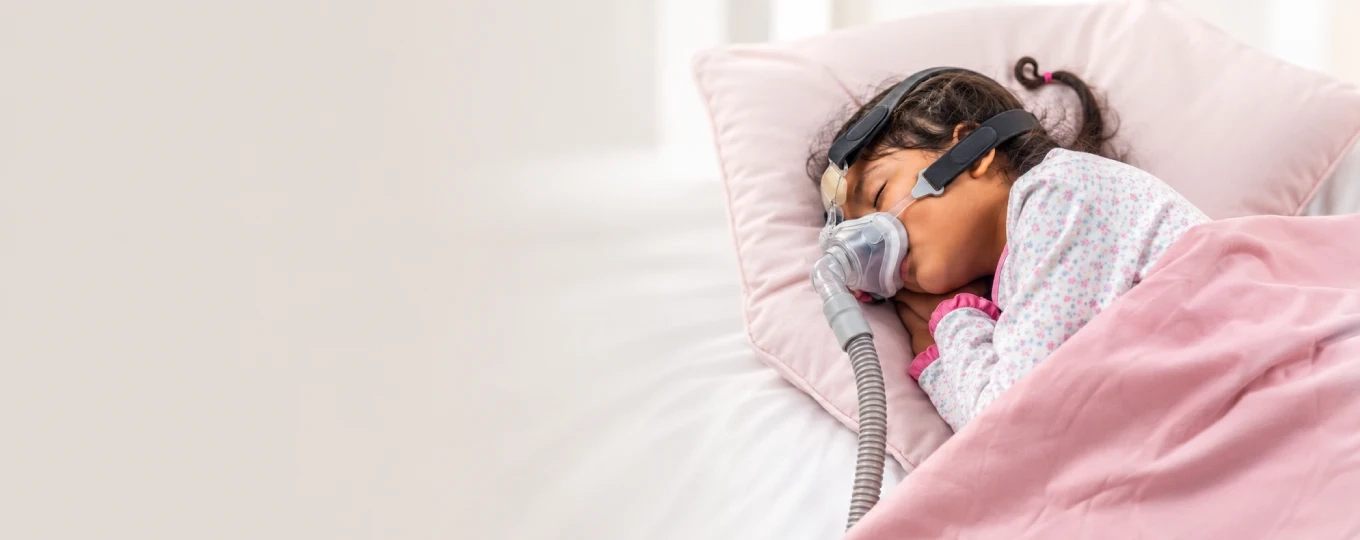
PAP therapy uses a mask that fits over your child’s nose or nose and mouth, connected to a machine that delivers air at a pressure that keeps the airway open during sleep. PAP may be used to prepare a child before surgery and may also be helpful when surgical treatment is not possible or desirable, or when surgery does not fully resolve OSAS.
Weight Management
If your child’s sleep specialist thinks that obesity may be contributing to OSAS, they may recommend a combined diet, exercise and behavioural programme. Weight management can help control OSAS and may be used alongside other treatments.
Myofunctional Therapy
Myofunctional therapy strengthens muscles in the tongue, mouth and upper throat and may help some children with OSAS.
Medical Management
Nasal sprays and oral leukotriene antagonists are helpful in the treatment of mild OSAS. Optimising treatment of associated allergic rhinitis and asthma, if present, is also important for a good outcome in OSAS.
Book an AppointmentFrequently Asked Questions (FAQ)
Not necessarily. Many children who snore do not have OSAS. However, regular snoring accompanied by breathing pauses, gasping or disturbed sleep should be assessed.
No. The sensors used during a sleep study do not cause pain or send electricity into the body. Some children may find the sensors or adhesive tapes unfamiliar or slightly uncomfortable.
This depends on the underlying cause. Because untreated OSAS can affect a child’s health and development, parents should not rely on the condition resolving without assessment.
Surgery can significantly improve or resolve OSAS in many children with enlarged tonsils and adenoids. However, some children may continue to have symptoms and require further assessment or treatment.