

Finding out that your baby has a swollen kidney during a pregnancy ultrasound can be worrying. You may wonder what caused it, whether it is serious or if your child will need treatment after birth.
This condition is known as hydronephrosis. It happens when urine collects in part of the kidney, causing it to become swollen or enlarged.
Hydronephrosis can be detected while a baby is still in the womb or later during childhood. In many cases, it does not cause noticeable symptoms and may only be discovered during an ultrasound.
While some cases improve on their own, others may require regular monitoring or treatment, depending on the cause and severity.
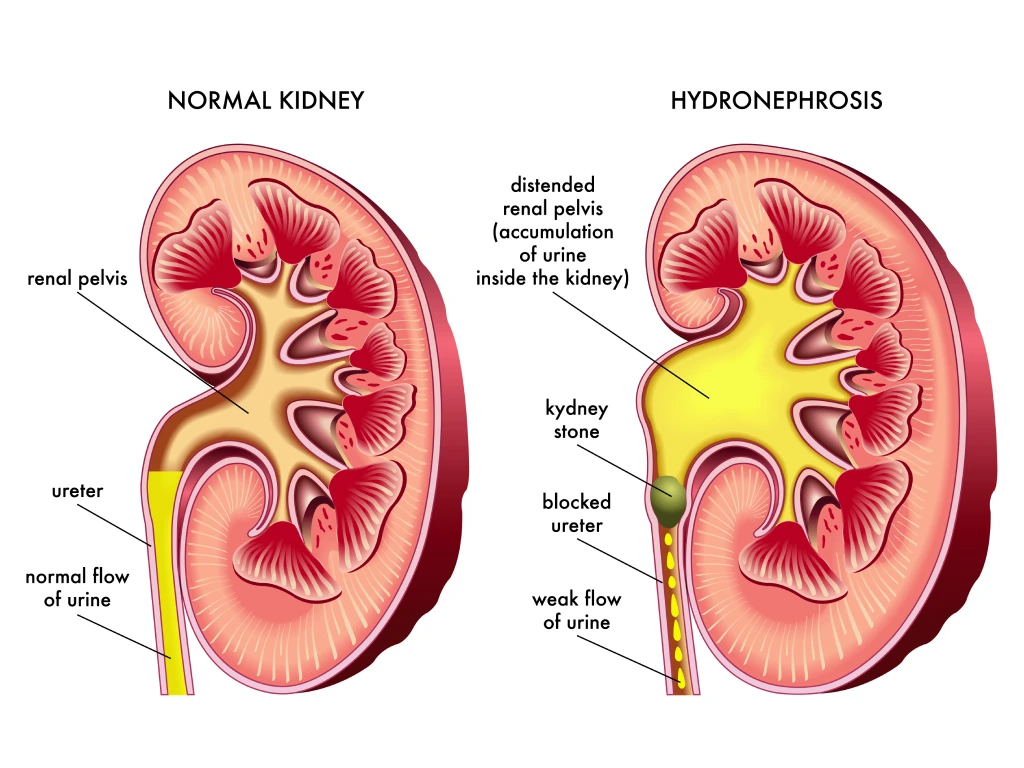
What Is Hydronephrosis in Babies?
Hydronephrosis is a medical term that describes a condition where fluid, usually urine, collects in a particular part of the kidney known as the renal pelvis. This works a little like the sink of the kidney, collecting urine before it travels down a tube called the ureter into the bladder.
If urine cannot flow down properly, or flows backwards towards the kidney, it can build up and cause swelling. This results in the appearance of hydronephrosis on an ultrasound.
Hydronephrosis can affect one or both kidneys, and its severity can vary from mild to severe.
Why Does My Unborn Baby Have a Swollen Kidney?
With antenatal ultrasound scans, hydronephrosis can sometimes be detected while the baby is still in the mother's womb. This is known as antenatal hydronephrosis or fetal hydronephrosis.
There are several reasons why this may happen.
In some babies, mild kidney swelling happens as the urinary system develops. As the baby grows, urine drainage may improve, allowing the swelling to gradually improve without treatment.
In other cases, hydronephrosis may be caused by a blockage affecting urine flow or urine flowing backwards towards the kidneys.
Some possible causes include:
- A narrowing or blockage where the kidney connects to the urine tube (UPJ obstruction): This can prevent urine from draining properly from the kidney, causing it to build up.
- Urine flowing backwards from the bladder towards the kidneys (vesicoureteral reflux or VUR): Instead of flowing towards the bladder, some urine travels backwards towards the kidneys. This may contribute to kidney swelling and increase the risk of urinary tract infections.
- A blockage in the tube that carries urine out of the body (posterior urethral valves or PUV): In some baby boys, extra folds of tissue in this tube can block urine flow, causing pressure to build up in the urinary system.
Not every case of antenatal hydronephrosis indicates a serious problem. However, your doctor may recommend follow-up ultrasound scans to monitor the swelling and determine whether further assessment is needed.
Does Hydronephrosis Always Cause Symptoms?
Hydronephrosis can often be a very silent finding. Sometimes, it is only discovered incidentally during an ultrasound.
In fact, some children only discover they have hydronephrosis when an ultrasound is performed for another reason, such as abdominal pain.
However, now with antenatal ultrasound scans, more severe cases of hydronephrosis may already be detected during the mother's pregnancy.
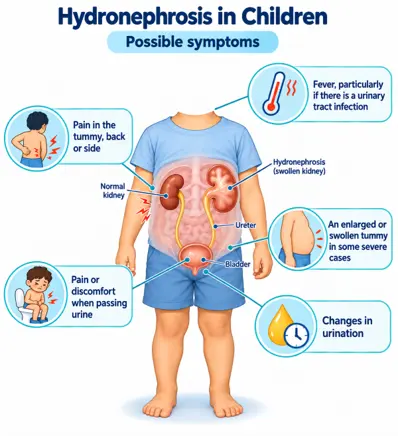
When symptoms do occur, they may include:
- Pain in the tummy, back or side
- Fever, particularly if there is a urinary tract infection
- Pain or discomfort when passing urine
- Changes in urination
- An enlarged or swollen tummy in some severe cases
These symptoms can also occur with other childhood conditions. A doctor may recommend further assessment to determine the cause.
How Is Hydronephrosis Diagnosed in Children?
Doctors usually assess hydronephrosis through a combination of medical history, physical examination and imaging tests.

1. Kidney and Bladder Ultrasound
An ultrasound is commonly used to check whether hydronephrosis is present and how severe the swelling is. It can also help doctors examine the kidneys, bladder and other parts of the urinary system.
2. Urine and Blood Tests
Depending on the child's condition, a doctor may recommend:
- Urine tests: To check for signs of a urinary tract infection or other abnormalities.
- Blood tests: To assess kidney function when necessary.
3. Further Investigations
If the ultrasound suggests a possible blockage or another urinary tract abnormality, further investigations may be needed to assess how urine flows through the urinary tract and whether it flows backwards towards the kidneys.
Depending on the findings, the doctor may recommend additional imaging tests. Not every child with hydronephrosis will require further investigations. The recommended tests will depend on your child's condition and ultrasound findings.
Can Hydronephrosis in Babies and Children Go Away on Its Own?
Yes. Some cases of hydronephrosis improve or resolve naturally as a child grows.
According to the National Institute of Diabetes and Digestive and Kidney Diseases (NIDDK), around half of babies diagnosed with hydronephrosis during pregnancy no longer have the condition by the time they are born. However, some babies may still have hydronephrosis after birth and require monitoring or further investigations.
This is why doctors may recommend follow-up ultrasound scans, even when a child does not have noticeable symptoms.
Does Hydronephrosis in Children Always Need Surgery?
Surgery is not always needed. So, it really depends on the condition. There are many causes of hydronephrosis and there are also many different severities. Depending on the progress of that as well as if there are any associated complications such as urinary infections or even kidney function damage, we will have to decide on the urgency and appropriateness of the different interventional options.
— Dr Isaac Liu, Consultant Paediatrician & Paediatric Nephrologist, SBCC Baby & Child Clinic
When Is Regular Monitoring Enough?
Children with mild hydronephrosis may only need regular ultrasound scans to monitor the condition.
Doctors may recommend repeating ultrasounds over several months to check whether the swelling is improving, remaining stable or becoming worse. This is sometimes called serial ultrasound monitoring.
Monitoring helps doctors decide whether the child can continue to be observed safely or may benefit from further treatment.
When Might Surgery Be Necessary?
In certain cases, surgery may be considered if hydronephrosis becomes more severe or causes complications.
The doctor will assess factors such as:
- The severity and cause of the hydronephrosis
- Whether the swelling is becoming worse
- Whether the child has repeated urinary tract infections
- Whether tests show that kidney function is being affected
- Whether there is a significant blockage in the urinary tract
If surgery is recommended, the type of treatment will depend on the underlying cause. Dr Isaac Liu, Consultant Paediatrician & Paediatric Nephrologist, can monitor your child's kidney health and function, and arrange a referral to Nobel Paediatric Surgery when surgical treatment needs to be considered.
What Surgical Options Are Available for Hydronephrosis?
The type of surgery recommended depends on the underlying cause of hydronephrosis. The aim is generally to correct the abnormality, improve urine drainage and protect kidney function.
A paediatric surgeon may consider different surgical approaches depending on your child's condition. These may include:
Pyeloplasty for UPJ Obstruction
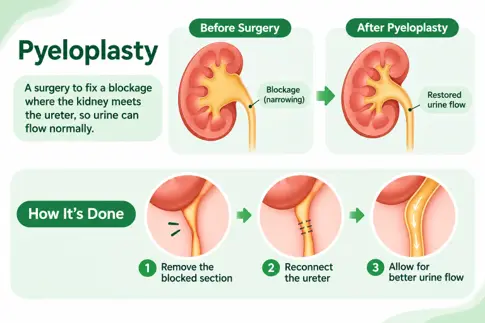
If hydronephrosis is caused by ureteropelvic junction (UPJ) obstruction, where the connection between the kidney and ureter is narrowed, a procedure called pyeloplasty may be considered.
During this procedure, the narrowed section is removed and the healthy ends of the urinary tract are reconnected to improve urine flow from the kidney into the ureter.
Surgical Treatment for Vesicoureteral Reflux (VUR)
For children with VUR, treatment depends on the severity of reflux. Some children only require monitoring or medical management. In selected cases, surgery may be considered to correct the abnormal connection between the bladder and ureter and help prevent urine from flowing backwards towards the kidneys.
Procedures for Other Urinary Tract Abnormalities
For example, posterior urethral valves (PUV), which can obstruct urine flow in baby boys, may require an endoscopic procedure to remove or divide the obstructing tissue in the urethra.
The choice of procedure will depend on the specific abnormality, the child's age and overall condition.
Where appropriate, minimally invasive surgical techniques may also be considered. The most suitable approach will be discussed with parents following an assessment of the child's condition.
When Should Parents Bring Their Child to a Doctor?

It is important to seek medical assessment if your child develops:
- Persistent tummy, back or side pain
- An unusually swollen or enlarged tummy
- Repeated urinary tract infections
- Changes in urination
- Vomiting, poor feeding or unexplained fever
- An ultrasound finding of hydronephrosis, particularly if it is persistent or progressive (worsening)
Seek urgent medical attention if your child has severe abdominal pain, cannot pass urine or appears seriously unwell.
Babies younger than three months with a urinary tract infection also require urgent medical assessment.
Getting the Right Care for Your Child’s Kidney Health
Finding out that your unborn baby or child has hydronephrosis can be worrying, but kidney swelling does not always mean surgery is needed. Some cases improve naturally, while others may require regular monitoring or further treatment depending on the cause and severity.
If your child has been diagnosed with hydronephrosis, a paediatric assessment can help determine whether further investigations or ongoing monitoring are needed to support their kidney health.
At SBCC Baby & Child Clinic, Dr Isaac Liu, Consultant Paediatrician and Paediatric Nephrologist, provides assessment and care for children with kidney and urinary tract conditions.
If surgical treatment is required, a paediatric surgeon can assess your child and discuss the most appropriate surgical options.
Speak to your paediatrician to understand your child's condition and the next steps in their care.
Frequently Asked Questions
Is Hydronephrosis Serious in Babies?
Not all cases of hydronephrosis are serious, but all cases need to be assessed. Some babies have mild swelling that improves naturally, while others may need closer monitoring or treatment. The severity depends on the underlying cause and whether kidney function is affected.
Can Hydronephrosis Cause a Child's Tummy to Swell?
Severe hydronephrosis can sometimes cause an enlarged tummy. However, abdominal swelling can have many causes. If a child has previously been diagnosed with hydronephrosis, an ultrasound may help determine whether the kidney swelling is still present.
Can Hydronephrosis Affect My Child's Kidney Function?
Severe or prolonged hydronephrosis caused by a significant urinary blockage may affect kidney function. However, mild hydronephrosis does not necessarily mean the kidneys have been damaged. A doctor will need to see your child to perform the necessary assessment.
Will My Child Need Surgery for Hydronephrosis?
Not necessarily. Surgery is not always needed. The decision depends on the underlying cause, the severity of the swelling, how the condition progresses and whether complications develop.
Does My Baby Need More Tests After Birth if Hydronephrosis Was Found During Pregnancy?
Possibly. Your baby's doctor may recommend a kidney and bladder ultrasound after birth to check whether the swelling has improved or remains present. Additional tests may be needed if the ultrasound suggests a blockage or another urinary tract abnormality. Not every baby will require further investigations.
Can My Child Live a Normal Life with Hydronephrosis?
Many children with mild hydronephrosis do well, particularly when the swelling improves or resolves. Children with more significant urinary tract problems may need ongoing monitoring or treatment. Their outlook depends on the underlying cause, the severity of the condition and whether kidney function is affected.
Related Doctor

Dr Isaac Liu
Consultant Paediatrician; Nephrologist MBBS (Singapore), MMed (Paediatrics), PhD (Singapore)Related Clinic

SBCC Baby & Child Clinic (General Paediatric and Kidney Centre)