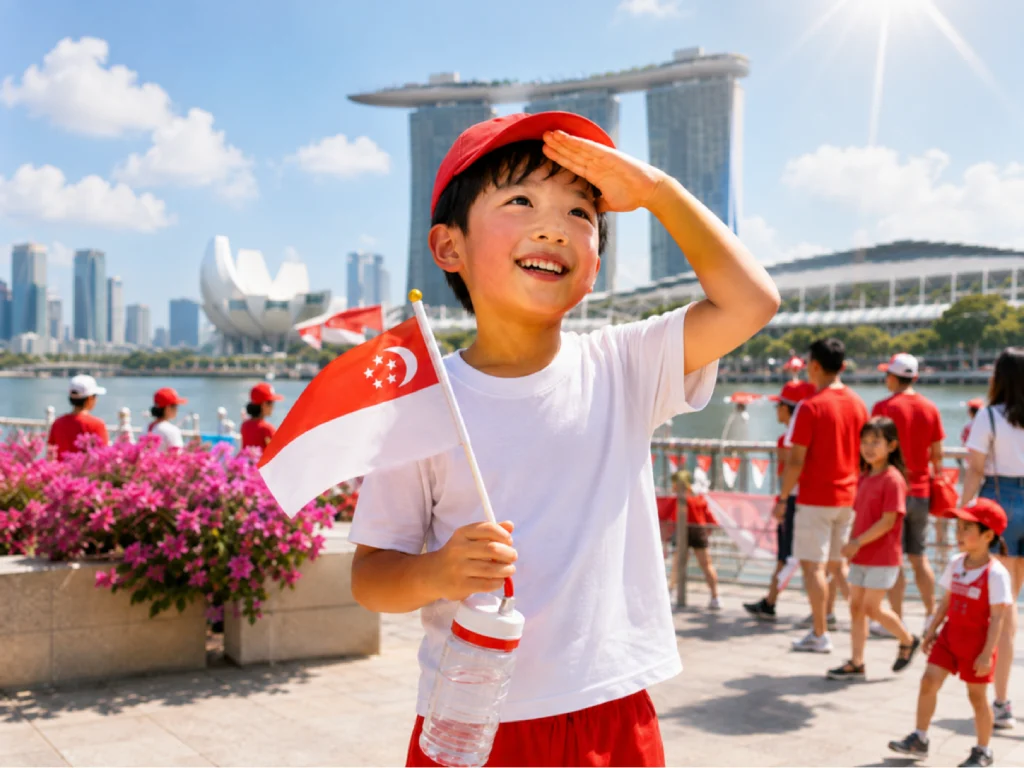
Singapore Independence Day, also known as National Day, is one of Singapore's most anticipated celebrations. Families across the island gather to enjoy fireworks, community carnivals and outdoor festivities, making it a wonderful opportunity to create lasting memories with your children.
However, Singapore’s warm and humid weather can make long outdoor celebrations tiring, especially for babies, toddlers and young children. When children spend too much time in the heat without enough rest or fluids, they may be at risk of heat exhaustion.
When Is It More Than Just Feeling Hot?
It is normal for children to feel warm, sweaty or tired after being outdoors. However, heat exhaustion is more than just feeling hot.
Heat exhaustion is defined as symptomatic heat related illness that occurs when the body overheats.
Why Are Children More Prone to Heat Exhaustion?
Children are more sensitive to heat than adults because their bodies regulate temperature differently.
- Their higher surface area-to-body mass ratio causes them to absorb heat more quickly.
- Their thermoregulation system is still immature.
- They do not cool themselves as efficiently as adults because they perspire less.
- Babies and toddlers may not recognise or reliably report heat stress symptoms and are less able to perform self-care measures, such as seeking shade or staying hydrated, independently.
- Young children often continue running and playing, even when they are becoming exhausted.
- Babies in strollers may be exposed to trapped heat if ventilation is poor.
Singapore's high humidity can make matters worse. Although children sweat to cool down, humid weather reduces the evaporation of sweat, making it harder for the body to release heat effectively.
This is why heat exhaustion in Singapore can develop even when children are drinking water if they spend long periods outdoors without enough shade or cooling breaks.
Signs of Heat Exhaustion in Children
Heat exhaustion can happen when the body becomes too hot and struggles to cool itself down. Recognising the early warning signs allows parents to act before it progresses to a more serious heat-related illness.
Parents should look out for these signs of heat exhaustion:
- Flushed, or cold and clammy skin
- Heavy sweating
- Tiredness or reduced energy
- Headache
- Dizziness
- Nausea or vomiting
- Muscle aches or cramps
- Feeling weak
- Becoming unusually quiet
- Irritability or crying more than usual
- Inability to continue activity, including playing
Older children may complain that they feel dizzy, sick, or tired.
For babies, signs may include:
- Fussiness
- Poor feeding
- Fewer wet nappies than usual
- Sleepiness
- Warm or flushed skin
- Crying that is difficult to settle
If you notice these heat exhaustion symptoms in kids, move your child to a cooler place, hydrate them, and let them rest.
What to Do If Your Child Has Heat Exhaustion
Acting early can help prevent heat exhaustion from becoming more serious.
- Move your child to a shaded or air-conditioned area as soon as possible.
- Let them sit or lie down and loosen or remove any tight or thick clothing.
- Offer fluids.
- Help cool them down by using a portable fan, placing a cool towel on the neck, or wiping the skin with cool water.
- Avoid giving ice-cold drinks too quickly, especially if your child feels nauseous. Small, regular sips are usually easier to tolerate.
If your child does not improve, vomits repeatedly, becomes very drowsy, or seems confused, seek medical care urgently.
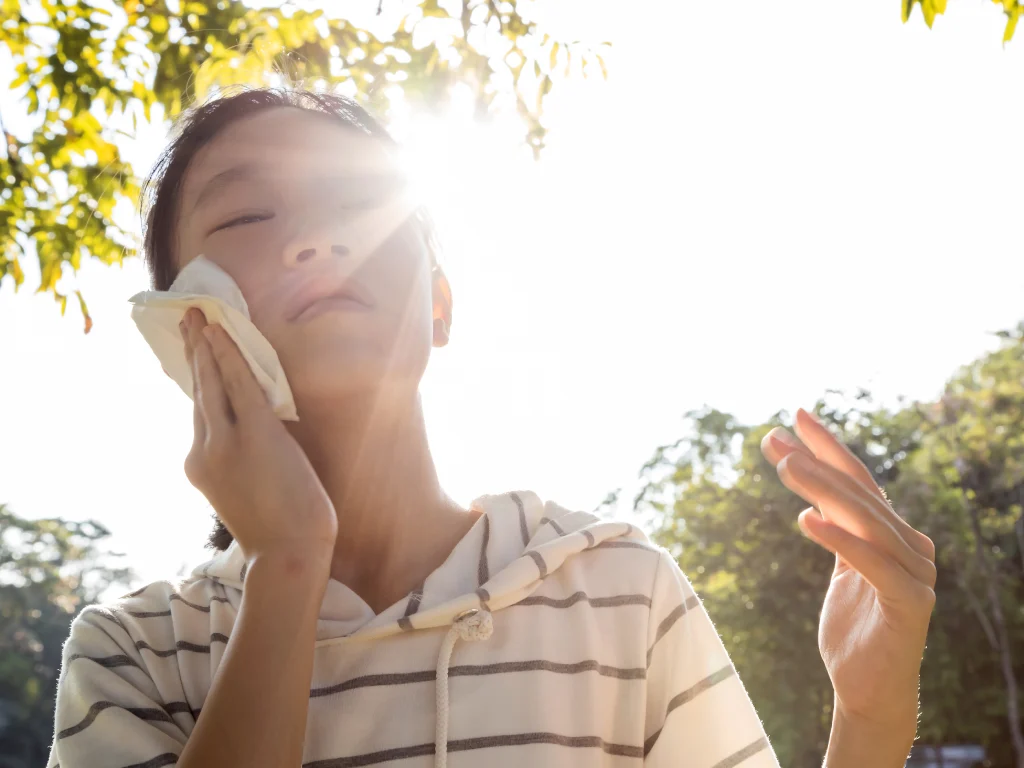
Before You Head Out: A Parent’s National Day Essentials
A little preparation can make the day more comfortable for your child.
Here are some practical tips for parents:
- Bring a water bottle to keep your child hydrated.
- Pack a hat or cap for sun protection.
- Carry a portable fan to help keep your child cool.
- Bring a cooling towel for quick relief from the heat.
- Apply sunscreen before heading outdoors.
- Carry an umbrella to provide additional shade.
- Pack extra changes of clothes in case your child becomes sweaty.
- Bring wet wipes or tissues for quick clean-ups and cooling.
- Carry a small towel to wipe away sweat.
Dress your child in lightweight, loose-fitting, breathable, and light-coloured clothing. A wide-brimmed hat can also help protect them from direct sunlight.
If your baby is in a stroller, check regularly to make sure they are not becoming too warm. Avoid covering the stroller completely with a blanket, as this can trap heat and reduce airflow.
Smart Ways to Keep Your Child Cool Throughout the Day
Children may not ask for water until they are already thirsty, so remind them to drink regularly. Encourage small sips of water throughout the day instead of waiting until they feel very thirsty. Provide electrolyte drinks if they will be outdoors for extended periods. Take breaks in nearby shopping malls, sheltered areas or air-conditioned spaces whenever possible.
Try to avoid staying under direct sun for long periods, especially during the hottest part of the afternoon. If you are attending an outdoor event, look for shaded areas and avoid overcrowded spots where air movement may be limited.
It may also help to plan shorter outdoor sessions. For example, spend some time outdoors, take a cooling break, then return later if your child still feels well.
Heat Exhaustion or Heat Stroke: What's the Difference?
The key difference between heat exhaustion and heat stroke is that children with heat exhaustion maintain a normal mental state. They may be irritable or uncomfortable, but they remain alert and oriented.
Red flags requiring immediate medical attention include:
- Any altered mental status, including confusion, disorientation, combativeness, fainting, or seizures
- A core body temperature of 40°C or higher
These features indicate heat stroke rather than heat exhaustion. Heat stroke is a medical emergency and requires immediate treatment.
Heat exhaustion may progress to heat stroke if left untreated in a hot environment. This is why early recognition and prompt treatment of heat exhaustion are so important.
When Should You See a Doctor?
Parents should seek medical care if their child’s symptoms fail to improve rapidly after cooling, resting, and hydration.
You should also see a doctor if your child has repeated vomiting, ongoing dizziness, severe headache, muscle cramps, poor feeding, fewer wet nappies, or seems unusually sleepy.
For babies, toddlers, children with medical conditions, or children who are taking regular medication, it is safer to seek advice earlier.
If your child shows signs of heat stroke, such as confusion, fainting, seizures, or difficulty waking, call for emergency medical help immediately.
Enjoy National Day Safely
National Day celebrations are enjoyable for families with young children. With a little preparation, regular hydration and cooling breaks, children can safely enjoy outdoor festivities while reducing their risk of heat exhaustion.
Remember to watch for the early signs of heat exhaustion, especially in babies and young children, and act promptly if symptoms develop.
If you are concerned about heat exhaustion in Singapore, or if you are unsure whether your child’s symptoms are heat-related, seek medical attention promptly.
At SBCC Baby & Child Clinic Singapore, our paediatricians can assess your child’s symptoms and advice on the next steps where needed.
Frequently Asked Questions
Can Children Develop Heat Exhaustion Even If They Drink Enough Water?
Yes. Many parents assume that staying hydrated is enough, but hydration alone does not eliminate the risk. High temperatures, humidity, prolonged sun exposure, and physical activity can still lead to heat exhaustion. That is why regular cooling breaks, shade, and appropriate clothing are just as important as drinking enough water.
How Long Does Heat Exhaustion Last?
Most children with mild heat exhaustion begin to feel better within 30 minutes to a few hours after moving to a cool environment, resting, and drinking fluids. However, recovery time can vary depending on how long they were exposed to the heat and how dehydrated they have become. If symptoms persist, worsen, or your child becomes increasingly drowsy, confused, or continues vomiting, seek medical attention promptly.
Can Babies Develop Heat Exhaustion?
Yes. Babies are especially vulnerable to heat exhaustion because they cannot regulate their body temperature as effectively as older children or adults. They also cannot tell you when they are feeling too hot or thirsty. Parents should watch for signs such as poor feeding, unusual fussiness, fewer wet nappies, warm or flushed skin, excessive sleepiness, or crying that is difficult to settle. If you suspect your baby may have heat exhaustion, move them to a cool place immediately and seek medical advice if symptoms do not improve.
What Temperature Causes Heat Exhaustion?
There is no specific temperature at which heat exhaustion occurs. A child can develop heat exhaustion whenever their body is unable to cool itself effectively. In Singapore's hot and humid climate, prolonged time outdoors, direct sun exposure, vigorous activity, and inadequate cooling breaks can all increase the risk, even if the temperature does not seem unusually high. Parents should pay attention to how their child is feeling rather than relying on the temperature alone.
Related Doctor

Dr Stephanie Hii
Consultant Paediatrician MBBS (Singapore), MMED Paediatrics (Singapore), MRCPCH (U.K)Related Clinic

SBCC Baby & Child Clinic (Ang Mo Kio)