






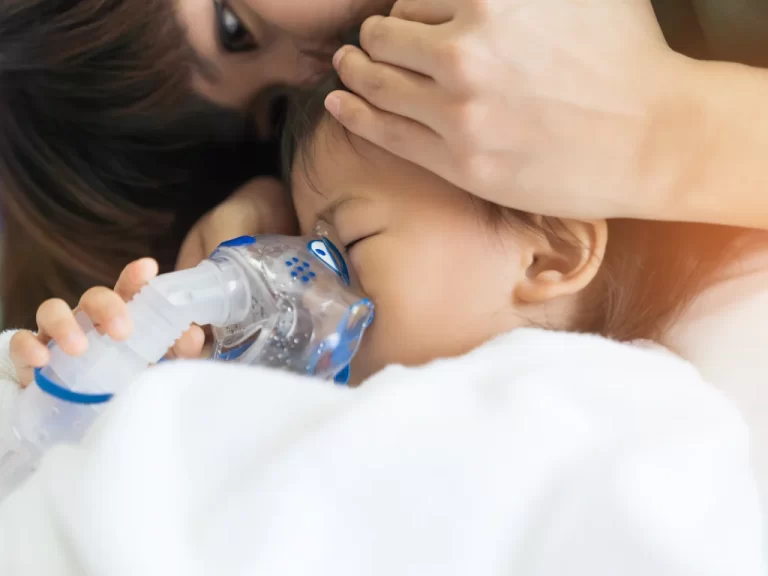
Respiratory syncytial virus (RSV) is a common infection in infants and circulates year-round in Singapore. It is one of the most frequent causes of bronchiolitis in young children.
Bronchiolitis occurs when the small airways in the lungs become inflamed and narrowed, making breathing more difficult. As a result, some babies with RSV may develop wheezing, rapid breathing, or signs of increased effort when breathing, rather than just a runny nose and cough.
Understanding how RSV can move from an upper respiratory infection to the lower airways helps parents recognise early warning signs and seek medical review promptly.
Bronchiolitis can be caused by several viruses, but RSV is one of the most frequently identified causes in infants.
In babies, the airways are smaller and more sensitive to inflammation. Even mild swelling or mucus build-up can significantly narrow these passages, making breathing harder. Bronchiolitis is therefore frequently seen in babies with RSV infections, especially during their first year of life.
Bronchiolitis is an infection of the smallest air passages in the lungs, called bronchioles. When these airways become inflamed and filled with mucus, airflow becomes restricted. As a result, babies may develop wheezing, rapid breathing or increased effort when breathing.
It is important not to confuse bronchiolitis with bronchitis. Bronchitis affects the larger airways and is more common in older children and adults, whereas bronchiolitis mainly affects infants and young children.

Although RSV can infect people of all ages, its impact is different in infants. Even mild narrowing of the small airways can significantly increase the effort required to breathe.
Infants breathe more rapidly and must coordinate sucking, swallowing and breathing during feeds. Respiratory strain can quickly affect feeding efficiency and energy levels.
While older children and adults with RSV often experience mild, cold-like symptoms, infants are more likely to develop lower airway involvement, such as bronchiolitis. This explains why the same virus can appear mild in one family member but more serious in a young baby.
When RSV progresses to bronchiolitis, symptoms usually go beyond those of a simple cold. Signs to look out for include:
The good news is that most infants with RSV, including those who develop bronchiolitis, recover fully with supportive care. Symptoms often peak over a few days before gradually improving.
However, it can sometimes be difficult to tell whether your baby’s condition is still mild or becoming more serious. A paediatric assessment can help clarify what is happening and provide reassurance. A doctor can listen to your baby’s chest, assess breathing effort, and advise on the next steps.
If your baby has wheeze, fast breathing or noticeable feeding changes, speak to SBCC Baby and Child Clinic for assessment and guidance. Early review can provide clarity, reassurance, and timely support for your child’s recovery.

Medically Reviewed by Dr Tan Zhen Han
Consultant Paediatrician
Tele-consultation (within Singapore)
|
10 minute Consultation |
General Paediatrics Case |
Sub Specialty Case |
|
1st Consult |
$90 |
$120 |
|
Follow up |
$50 |
$80 |
Additional charges may apply for extended consultation with the doctor.
Delivery of Medication (within Singapore):
Orchard Road – $2, Tuas – $4, Sentosa and Airport – $10
*Tele-consultation (outside of Singapore) is only applicable for Sub Specialty Follow up.
In the current COVID-19 situation, parents may be hesitant to bring their little one to clinics. With this tele-consultation service, you may consult a paediatrician on non-urgent clinical matters without leaving your home.
FOLLOW-UP for stable chronic conditions such as asthma, allergic rhinitis, food allergy, eczema, constipation, juvenile arthritis, chronic urticaria
If your child is experiencing a medical emergency, please call an ambulance at 995 or make your way to the nearest Accident & Emergency department immediately. If it is not an emergency, but you/your child do not meet the requirement for telemedicine please call our clinics for an appointment. If you need mental health support, please call SOS Hotline (1800-221 4444).
1. Fill in the online registration form and make an appointment with your preferred paediatrician.
2. Complete the payment details before submitting the online registration form.
3. You will receive an SMS and Email to confirm your registration.
4. As the tele-consult request needs to be approved by the paediatrician, you will receive an SMS and Email confirming your request.
5. You will receive a video consultation link by SMS and Email when your appointment is near.
6. Click the link to start your consultation.
7. Once complete, you will receive a link by SMS and Email on the amount payable to the clinic.
8. If you have selected delivery of medication, a delivery fee will apply to your final bill amount.
A standard delivery fee of $15.00 will be charged for medication delivery within Singapore. You will receive your medication within 3 hours.
Please note the following surcharges apply to the following area:
Your medication will be delivered to your address via a courier.
At the time of registration, we charge an amount of $1 to authenticate your credit card. However, please note that this amount is immediately reversed once your request is submitted successfully.
Payment is made via your submitted credit card details at the time of registration.
| Doctor Name | Doctor Specialty (Special Interest) |
| Dr Alison Joanne Lee | Paediatric Medicine (Allergy & Immunology) |
| Dr Chan Kit Yee | Paediatric Medicine (Cardiology) |
| Dr Charmaine Teo | Paediatric Medicine |
| Dr Jenny Tang | Paediatric Medicine (Asthma, Lung, Sleep & Allergy) |
| Dr Martha Liu | Paediatric Medicine |
| Dr Nancy Tan | Paediatric Medicine (Gastroenterology, Hepatology & Nutrition) |
| Dr Natalie Epton | Paediatric Medicine (Neonatology) |
| Dr Ratna Sridjaja | Paediatric Medicine |
| Dr Wong Chin Khoon | Paediatric Medicine |
| Dr Ng Ying Woo | Obstetrics & Gynaecology* |
Thank you for choosing SBCC's Tele-Consultation service. At SBCC, we strive to provide you with a seamless and effective healthcare experience. Our Tele-consultation service is different than other providers as we can schedule a tele-consult with your preferred paediatrician through our Platform.
Please go through the below terms and conditions for our Tele-Consultation process including your rights and responsibilities of this platform. These Terms and conditions, together with our privacy policy constitute an agreement between you and Healthway Medical group.