







A baby’s wide-eyed stare may seem simple, but it reveals far more than curiosity alone. From the way infants track movement to how they focus on faces and objects; their attention plays a crucial role in early development. These moments offer important insights into how their brain, vision, and overall abilities develop.
Understanding these signs can help parents better recognise healthy development stages and support their child’s growing cognitive skills.
Focus is one of the earliest building blocks of learning. When a baby locks eyes with a caregiver or follows a moving toy, their brain is actively processing information. This ability supports memory, problem-solving, and emotional bonding — all essential components of healthy child development stages.
What focus does for your baby:
Tip for parents: You can encourage focus by getting down to your baby’s eye level, making eye contact, and holding toys within their line of sight.
Curiosity often appears before parents expect it. A baby who turns toward sounds, stares at contrasting colors, or watches facial expressions is showing natural curiosity about their environment.
Tip for parents: Encourage curiosity by talking to your baby, responding to their looks and gestures, and offering safe, age-appropriate toys for exploration.
Every baby develops at their own pace, but certain focus-related behaviors are commonly seen at different stages. Paediatricians monitor these patterns during routine check-ups to ensure healthy progress.
Babies begin focusing on faces and high-contrast objects. Brief eye contact and tracking movement are positive early signs. They can briefly fixate on objects at 1 month old and begin to track moving objects smoothly across midline by 3 months old. They can recognise caregivers’ faces and smile socially by 6–8-week-old.
Improved hand-eye coordination allows babies to focus longer on toys and reach for objects. There are improved depth perceptions and interest in colorful toys. This marks progress in early cognitive skills.
Babies can shift attention between objects, better and more consistent recognition of familiar faces, and show interest in exploring their surroundings.
Stranger anxiety may appear. Focus becomes more intentional and purposeful.
It is important to remember that developmental milestones reflect general patterns rather than strict timelines. Healthy babies may reach them slightly earlier or later.
You play a key role in helping your baby develop attention and learning skills. Simple daily interactions can make a big difference. While every baby develops at their own pace, there are age-appropriate ways to encourage focus and curiosity at home.
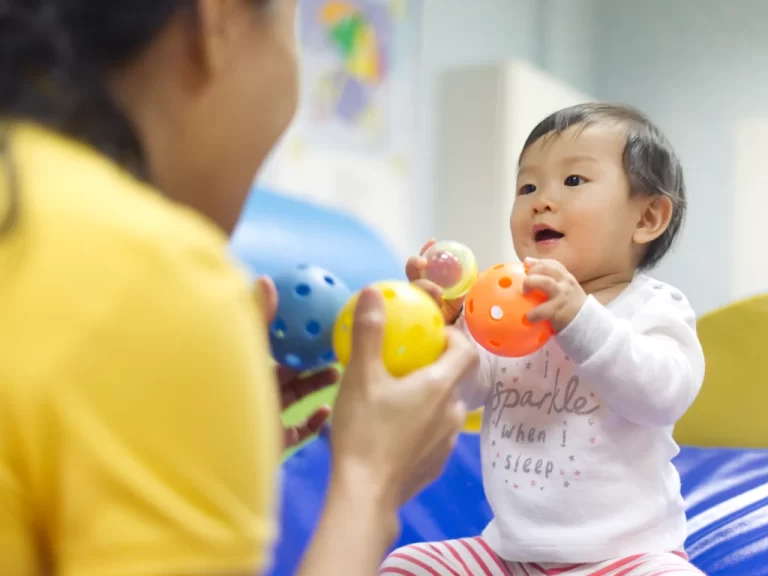
Tips for all ages:
Every baby develops at their own pace, but some signs may warrant closer attention or a paediatric consultation.
Most babies vary in their development. These signs are meant to guide you on when to get reassurance and not to worry unnecessarily.
From a baby’s first curious glance to sustained attention in toddlerhood, focus and curiosity are powerful indicators of healthy development. By noticing these signs and supporting them early, parents help lay the foundation for lifelong learning, problem-solving, and resilience.
Monitoring focus isn’t about comparison; it’s about understanding your child and giving them the right support at the right time.
At SBCC Baby & Child Clinic, our experienced paediatricians guide parents through these subtle yet meaningful milestones, helping you recognise and nurture your baby’s attention and curiosity so they can explore, learn, and thrive from the very beginning.

Medically Reviewed by Dr Wong Chin Khoon
Consultant Paediatrician
Tele-consultation (within Singapore)
|
10 minute Consultation |
General Paediatrics Case |
Sub Specialty Case |
|
1st Consult |
$90 |
$120 |
|
Follow up |
$50 |
$80 |
Additional charges may apply for extended consultation with the doctor.
Delivery of Medication (within Singapore):
Orchard Road – $2, Tuas – $4, Sentosa and Airport – $10
*Tele-consultation (outside of Singapore) is only applicable for Sub Specialty Follow up.
In the current COVID-19 situation, parents may be hesitant to bring their little one to clinics. With this tele-consultation service, you may consult a paediatrician on non-urgent clinical matters without leaving your home.
FOLLOW-UP for stable chronic conditions such as asthma, allergic rhinitis, food allergy, eczema, constipation, juvenile arthritis, chronic urticaria
If your child is experiencing a medical emergency, please call an ambulance at 995 or make your way to the nearest Accident & Emergency department immediately. If it is not an emergency, but you/your child do not meet the requirement for telemedicine please call our clinics for an appointment. If you need mental health support, please call SOS Hotline (1800-221 4444).
1. Fill in the online registration form and make an appointment with your preferred paediatrician.
2. Complete the payment details before submitting the online registration form.
3. You will receive an SMS and Email to confirm your registration.
4. As the tele-consult request needs to be approved by the paediatrician, you will receive an SMS and Email confirming your request.
5. You will receive a video consultation link by SMS and Email when your appointment is near.
6. Click the link to start your consultation.
7. Once complete, you will receive a link by SMS and Email on the amount payable to the clinic.
8. If you have selected delivery of medication, a delivery fee will apply to your final bill amount.
A standard delivery fee of $15.00 will be charged for medication delivery within Singapore. You will receive your medication within 3 hours.
Please note the following surcharges apply to the following area:
Your medication will be delivered to your address via a courier.
At the time of registration, we charge an amount of $1 to authenticate your credit card. However, please note that this amount is immediately reversed once your request is submitted successfully.
Payment is made via your submitted credit card details at the time of registration.
| Doctor Name | Doctor Specialty (Special Interest) |
| Dr Alison Joanne Lee | Paediatric Medicine (Allergy & Immunology) |
| Dr Chan Kit Yee | Paediatric Medicine (Cardiology) |
| Dr Charmaine Teo | Paediatric Medicine |
| Dr Jenny Tang | Paediatric Medicine (Asthma, Lung, Sleep & Allergy) |
| Dr Martha Liu | Paediatric Medicine |
| Dr Nancy Tan | Paediatric Medicine (Gastroenterology, Hepatology & Nutrition) |
| Dr Natalie Epton | Paediatric Medicine (Neonatology) |
| Dr Ratna Sridjaja | Paediatric Medicine |
| Dr Wong Chin Khoon | Paediatric Medicine |
| Dr Ng Ying Woo | Obstetrics & Gynaecology* |
Thank you for choosing SBCC's Tele-Consultation service. At SBCC, we strive to provide you with a seamless and effective healthcare experience. Our Tele-consultation service is different than other providers as we can schedule a tele-consult with your preferred paediatrician through our Platform.
Please go through the below terms and conditions for our Tele-Consultation process including your rights and responsibilities of this platform. These Terms and conditions, together with our privacy policy constitute an agreement between you and Healthway Medical group.